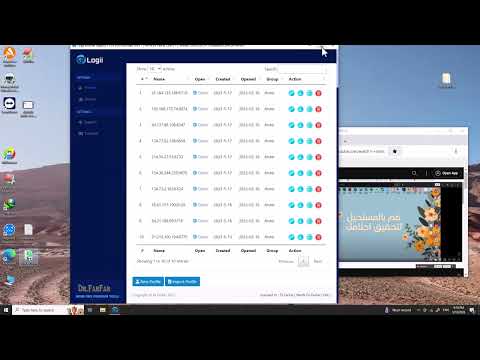
Quick answer: Multiple account apps create isolated browser profiles — each with its own separate cookie store, browsing history, and (in anti-detect versions) a unique hardware fingerprint — so you can operate different accounts on the same platform without those accounts being detected as connected. Cookie-only tools (SessionBox, Ghost Browser) handle session separation. Anti-detect browsers (Multilogin, GoLogin, RoxyBrowser) additionally spoof canvas, WebGL, and hardware signals for platforms with deeper fingerprinting.
What Multiple Account Apps Are Trying to Solve
A standard browser maintains one persistent identity per browsing context — one set of cookies, one hardware fingerprint, one IP address. When you log into Platform X in Tab 1 and try to log into a second Platform X account in Tab 2, the second login replaces the first (because they share the same cookie store). When you open a second browser window and log in there, the same device fingerprint links both sessions to the same machine.
Multiple account apps solve this by creating parallel, isolated browser environments. The isolation depth differs by tool type — and choosing the right type for a given platform matters significantly for whether the isolation actually works against that platform’s detection methods.
Category 1: Session Management Apps (Cookie Isolation)
These tools create separate session containers within a single browser. Each container has its own cookies, localStorage, and sessionStorage. They do not modify the browser’s hardware fingerprint signals. Examples: SessionBox, Ghost Browser, Multilogin browser workspaces (not to be confused with Multilogin’s full anti-detect product — some plans primarily focus on session management).
Best for: developers managing multiple environment logins (staging, production, testing), organic social media management, SaaS tool management where cookie isolation is all that’s needed. Not suitable for: ad platforms, marketplace seller accounts, or any platform that uses canvas or WebGL fingerprinting as a detection layer.
Category 2: Anti-Detect Browsers (Full Hardware Fingerprint Isolation)
| Fingerprint Signal | Session App | Anti-Detect Browser |
|---|---|---|
| Cookies / localStorage | Isolated per session | Isolated per profile |
| Canvas hash (GPU fingerprint) | Shared (real machine value) | Unique per profile (spoofed) |
| WebGL renderer string | Shared | Spoofed per profile |
| Hardware concurrency (CPU threads) | Shared (real machine value) | Simulated per profile |
| Font list | Shared | Controlled per profile |
| Proxy / IP address | Per session (paid plans) | Per profile (all plans) |
| Timezone alignment | Shared (system timezone) | Set per profile to match proxy |
Anti-detect browsers modify the signals in the right column above for each profile independently. The canvas spoofing is the most significant: the canvas fingerprint is a pixel-level hash computed from how the GPU renders a specific shape with the browser’s font stack. It’s machine-specific and persistent — every request from the same machine produces the same hash. Anti-detect browsers inject modified canvas rendering output so each profile produces a different, internally consistent hash. Platforms reading this signal see each profile as a different device.
Using the same multiple account app across two different use cases without adjusting the tool. An operator who successfully uses SessionBox for managing 12 organic social media accounts concludes that SessionBox is sufficient for managing five Facebook Ad accounts. The organic accounts work because those profiles aren’t checked against hardware fingerprints in the same way. The ad accounts get linked because they share a canvas fingerprint. The tool isn’t failing — it was never designed for the second use case. Match the tool’s isolation depth to each specific platform’s detection method, not to the general category of “multiple accounts.”
Key Selection Criteria for Multiple Account Apps
-
1
Identify the platform’s detection method — run a fingerprint test on the target platform before choosing a tool. Understanding whether it reads canvas/WebGL values determines whether cookie isolation or full fingerprint isolation is needed.
-
2
Assess profile count and team size — per-profile pricing scales differently across tools. For a single operator with 5 accounts, any tool may be cost-effective. For a team of 8 operators managing 200+ profiles, the cost structure matters significantly. Compare per-seat plus per-profile costs across options before committing.
-
3
Check team access features — if multiple operators need to share profiles, verify that the tool supports workspace sharing with role-based permissions. Not all multiple account apps support team access on their base plans.
-
4
Evaluate proxy integration — some tools provide built-in proxy management; others require external proxy sourcing and manual configuration per profile. If you’re building a workflow with 50+ profiles, the difference between manual proxy entry and bulk-import tooling is a significant operational consideration.
RoxyBrowser covers the full isolation stack — session, fingerprint, and proxy — in a single anti-detect browser tool worth evaluating against Multilogin and GoLogin on the specific platforms you manage before committing to annual pricing on any of them. The complete RoxyBrowser setup guide shows that stack in order.

FAQ: What Does Multiple Account App Do
Can a multiple account app get my accounts banned?
The app itself doesn’t cause bans — misconfiguration of the app or using it on platforms that actively prohibit multi-account operation does. A correctly configured anti-detect browser with proper fingerprint isolation and distinct proxies provides the same detection surface as separate physical machines — which platforms treat as unrelated users. Bans typically result from configuration errors (shared proxies, mismatched timezones, inconsistent fingerprint configurations) or from violating the platform’s terms independently of the technical setup (content policy violations, spam behavior, payment fraud).
How many accounts can a multiple account app handle?
Profile storage is generally unlimited or practically uncapped across anti-detect browsers — the limit isn’t account count, it’s the number of simultaneously active profiles (which is RAM-constrained) and the per-profile or per-seat pricing structure of the plan. Storing 1,000 profiles with 20 active simultaneously is a different operational model than running all 1,000 at once. Most agency workflows use high profile counts with modest simultaneous-activity counts, which most anti-detect tools accommodate. Ready to open one? See how to open a multi account for the step-by-step.
Does a multiple account app work on both Windows and Mac?
Most major anti-detect browsers (Multilogin, GoLogin, AdsPower, RoxyBrowser) support both Windows and Mac. Linux support varies by tool. The canvas fingerprint values are GPU-dependent and OS-dependent — the same anti-detect browser on a Windows machine and a Mac will produce different “real” canvas hashes before spoofing, which the tool then overrides with a synthetic value. Cross-platform profile sharing (a profile configured on Windows, launched on Mac) works at the app level but requires that the spoofed fingerprint values remain consistent — which the anti-detect layer handles. For the underlying workflow, see what multi browsing actually means.
Is a multiple account app the same as a VPN?
No — these are different layers of isolation addressing different detection signals. A VPN changes your IP address to the VPN server’s exit node — all profiles using the VPN share the same exit IP, which is typically a datacenter IP recognizable as a VPN server. A multiple account app with per-profile proxies gives each profile a different IP, ideally a residential IP that doesn’t appear in VPN/proxy blocklists. VPNs provide no fingerprint isolation. Multiple account apps with anti-detect features provide fingerprint isolation. Using both — a VPN for your overall connection plus per-profile proxies for account separation — creates conflicting routing that can break profile proxy isolation. Use one or the other, not both simultaneously.