Quick answer: To open a multi-account in a browser: use Chrome’s built-in profile switcher (top-right avatar icon → Add) for basic session separation, or Firefox Multi-Account Containers for tab-level isolation. For ad platforms and marketplaces with device fingerprinting, use a dedicated anti-detect browser — Chrome profiles and Firefox containers share the same hardware fingerprint across all profiles on the same machine.
Understanding What “Opening a Multi-Account” Actually Requires
The phrase “open a multi-account” covers several distinct setups with different technical requirements. Someone asking how to be logged into their personal Gmail and their work Gmail simultaneously has a different isolation requirement than an agency managing five Facebook ad accounts for five different clients. The technique for one is cookie isolation; the technique for the other is full device fingerprint isolation. Using the wrong approach for the context is the most common source of account flags when operating multiple accounts.
Method 1: Chrome Profile Switcher (Cookie Isolation Only)
Chrome’s built-in profile system creates separate browser identities with isolated cookie stores, browsing history, bookmarks, and extension settings. To add a new profile: click the circle avatar icon in the top-right corner of Chrome, select “Add” (or “Add profile”), and follow the prompts. Each profile appears as a separate color-coded icon in the corner. Switching between them opens separate Chrome windows, each with its own login state.
What Chrome profiles isolate: cookies, localStorage, session storage, browsing history, extensions, and bookmarks. What they don’t isolate: canvas fingerprint (all Chrome profiles on the same machine share the same canvas hash), WebGL output, hardware concurrency, font enumeration, and the device’s IP address (without a separate proxy). For platforms that read only cookies, Chrome profiles work. For platforms that fingerprint hardware signals, they don’t.
Method 2: Firefox Multi-Account Containers (Tab-Level Session Isolation)
Firefox’s Multi-Account Containers extension allows separate cookie stores per container within the same Firefox window. You assign tabs to containers — “Work,” “Personal,” “Client A,” “Client B” — and each container maintains its own isolated session. Unlike Chrome profiles, containers coexist in the same window, so switching between accounts is just switching tabs rather than switching windows.
The same fingerprint limitation applies: all Firefox container tabs on the same machine share the same Firefox hardware fingerprint. The containers separate cookies; they don’t modify the underlying device signals. Firefox Multi-Account Containers is an excellent solution for personal multi-account workflows and developer testing. It’s not a solution for scenarios where hardware fingerprinting is the detection mechanism.
Method 3: Anti-Detect Browser Profiles (Full Isolation)
| Setup | Cookie Isolation | Fingerprint Isolation | IP Isolation |
|---|---|---|---|
| Chrome profiles | ✓ | ✗ | ✗ |
| Firefox containers | ✓ | ✗ | ✗ |
| SessionBox / Ghost Browser | ✓ | ✗ | ✓ (paid) |
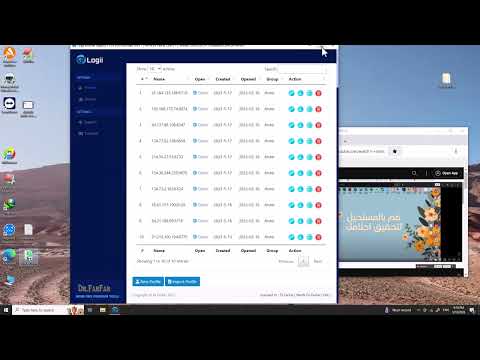
| Anti-detect browser (RoxyBrowser, GoLogin, etc.) | ✓ | ✓ | ✓ |
Anti-detect browsers create isolated profiles where each one gets a synthetic hardware fingerprint — a unique canvas hash, a spoofed WebGL renderer string, simulated hardware concurrency values — alongside per-profile proxy assignment. The combination means each profile presents as a completely different device on a different network. Platforms that correlate accounts based on hardware signals will see each profile as an independent entity.
Choosing the isolation method based on interface preference rather than platform requirements. Chrome’s profile switching is convenient; Firefox containers are elegant; an anti-detect browser takes more setup. Operators sometimes pick the convenient option first and only escalate to a deeper isolation method after accounts get flagged. The cost of that sequence — account restriction, recovery process, potential permanent loss — is higher than the cost of starting with the correct tool for the platform’s actual detection sophistication. Match the tool to the platform’s known risk level from day one, not from the day of the first flag.
For high-risk multi-account setups — ad accounts, marketplace sellers, affiliate networks — RoxyBrowser provides the hardware fingerprint layer alongside per-profile proxy management in a single tool built for these workflows. The full RoxyBrowser setup guide covers the hardware-fingerprint layer.

FAQ: How Do I Open a Multi Account
Does opening a multi-account require a different email address?
Depends on the platform. Some platforms (Gmail, social networks) allow multiple accounts under different email addresses as an officially supported feature. Others (Facebook) restrict personal accounts to one per person regardless of email address. Marketplace platforms (Amazon Seller Central) may allow multiple seller accounts only under specific circumstances (separate legal entities, prior approval from Amazon). The email address distinction is a credential layer — it doesn’t address the device fingerprint layer that matters for anti-detection. You can have separate emails for each account and still have those accounts linked by shared hardware signals if they’re accessed from the same unmodified browser.
How do I switch between multi-accounts quickly?
The fastest workflow depends on the tool: Chrome profile switching uses Ctrl+Shift+M (Windows) or Cmd+Shift+M (Mac) to open the profile picker; Firefox containers allow tab-switching within the same window; anti-detect browsers show all profiles in a dashboard and launch each into its own window. For agency workflows with 20+ client accounts, the dashboard-based model of anti-detect browsers is generally faster than window-based Chrome profile switching, since all profiles are visible and organized in one panel rather than requiring separate window management.
Can I open multi-accounts on mobile?
Chrome for Android and iOS support multiple signed-in accounts with a switcher menu. Mobile platforms in general have less sophisticated third-party cookie isolation tooling than desktop — most multi-account tools designed for agency workflows are desktop-only. For mobile testing, the most common approach is using different physical devices (or device emulators) for different accounts, rather than relying on mobile browser profile separation, which provides less robust isolation than the desktop equivalents.
What happens if I accidentally mix accounts in a multi-account setup?
The severity depends on what was mixed and on which platform. Accessing Account A while logged into Account B’s session in the same cookie store (the most common mixing error) creates a cross-session event that the platform logs. On strict platforms, this triggers a review process. The practical recovery: close all sessions, let several days pass with no cross-account activity, then log back in separately from properly isolated profiles. The historical log of the mixing event doesn’t disappear, but platforms typically weigh recent patterns more heavily than isolated historical events when evaluating whether to restrict accounts.